
Become an Effective Learner
Methods to Become an Effective Learner
There are several methods that can promote the development of a learner’s skills:
- Keep unnecessary electronic devices away while studying.
-
Use active recall techniques: These techniques help transfer information from short-term to long-term memory.
- Read your notes at night, go to sleep, and review them aloud in the morning.
- Flashcards: Everyone knows about flashcards, but few people know how to use them effectively. Most people make the mistake of passively reading them. Instead, create them with essential information, write them yourself, make sure each card contains short and precise info, and review them at least once a day for two weeks before the exam.
- Do not procrastinate and leave schoolwork until the last minute.
What’s better: Studying alone or in a group?
Studying alone or in a group depends on your learning style. Group study is ideal for stimulating understanding, exchanging ideas, and teaching each other, but be careful! In 99% of cases where students studied in groups larger than five, they ended up socializing instead of studying. They talk about their weekends, their dogs, and easily lose focus. That’s why for intensive study sessions, it’s better to study alone. You can also study at the local library, which offers a calm and quiet environment.

Photo by Marvin Meyer on Unsplash
Coffee or Energy Drinks: Which One to Choose?
Coffee and energy drinks are often used by students to study late at night. Caffeine increases alertness, improves concentration, and reduces fatigue by blocking adenosine, making coffee and energy drinks common choices for late study sessions.

Photo by Jenn Wood on Unsplash

Photo by Garv Chaplot on Unsplash
Energy drinks provide a temporary boost due to their high sugar content, but after the initial effect, they can reduce concentration, increase stress, anxiety, and nervousness. They may cause energy crashes, palpitations, and disrupt sleep, which negatively affects focus.
Drinking coffee while studying temporarily improves alertness, concentration, short-term memory, and mood. Moderate consumption (1-4 cups/day) is generally safe, but exceeding 400 mg/day can cause anxiety, insomnia, palpitations, and dependence.
Finally, a NIH study showed that coffee consumption increases the brain’s memory capacity. As shown in the diagram, people who consumed coffee performed better when recalling information on demand.
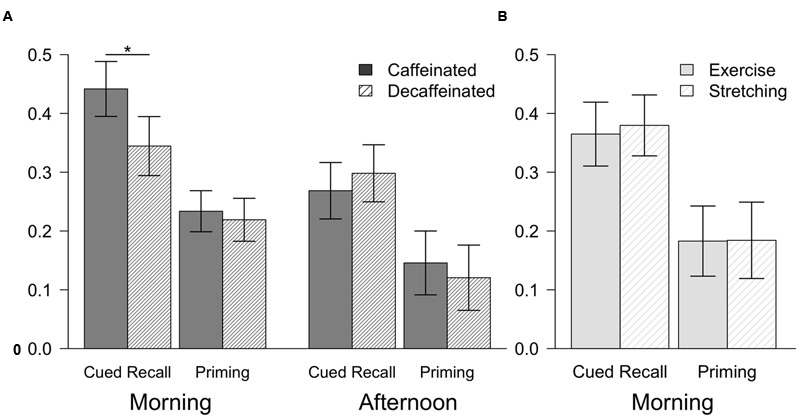
CC BY license from NIH
Using Music
Many people listen to music while studying, but it raises the question of whether it is actually a good idea. Some say music is a distraction, while others cannot study without it. In fact, it has been scientifically proven that lyrical or highly rhythmic music can negatively affect learning, because the brain processes both the words of the song and the words in your notes at the same time. As a result, a person is more likely to focus on singing along than on concentrating on their studies.
However, if you need music to stay focused, instrumental music without lyrics—such as lo-fi (low fidelity) music—can be a good choice. You can listen to rhythmic or lyrical music when performing tasks that require little or no attention, such as checking emails, writing to a teacher, or doing online research for a possible school project.

Illustration by Public Domain Vectors on Unsplash
When Not to Listen to Music?
If a task requires your full concentration, it is better not to listen to any music at all and continue in silence. This allows the brain to eliminate distractions and focus entirely on the task at hand.
How to Stay Organized?
To be an effective learner, you need to know how to stay organized. Use a planner to note homework, exams, due dates, etc. A well-organized planner increases efficiency, reduces wasted time, and lets you track your day accurately. You can schedule study periods by subject, giving more time to difficult subjects and less to easier ones. For example, on a week, you might study math for 30 minutes on Monday, then science for 15 minutes, and so on. If that’s difficult, focus on one subject at a time.
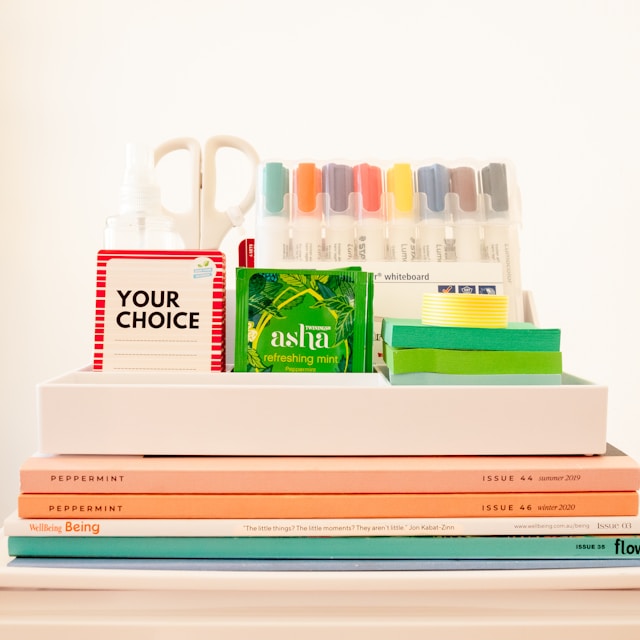
Photo by Fiona Smallwood on Unsplash